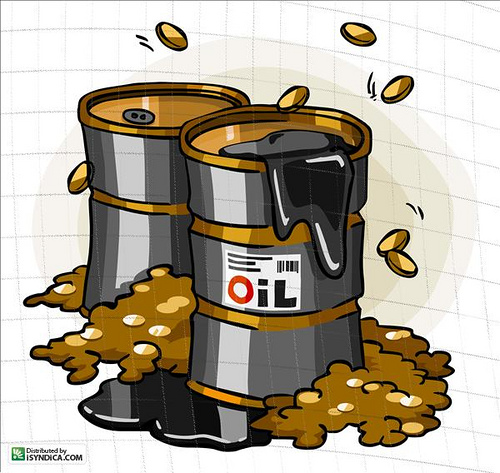
Tuesday, January 4, 2011

Gold’s mysterious drop Commentary: No obvious catalyst for gold’s big Tuesday drop

By Claudia Assis, MarketWatch
SAN FRANCISCO (MarketWatch) — Gold futures on Tuesday took their biggest plunge in six months as optimism about the global economy dimmed the metal’s safe-haven appeal and investors migrated mostly to cash.


Gold for February delivery /quotes/comstock/21e!f:gc\g11 (GCG11 1,383, +4.30, +0.31%)  fell $44.10, or 3.1%, to settle at $1,378.80 an ounce on the Comex division of the New York Mercantile Exchange.
That was the largest one-day drop for gold futures since July. It was also the metal’s lowest settlement in nearly three weeks. Gold settled at $1,371 an ounce on Dec. 16.
“People are shooting first and asking questions later,” said Adam Klopfenstein, senior market strategist with Lind-Waldock in Chicago.
Silver lost more than 5%, while copper ended 2% lower, giving up the previous session’s record high.
The flow of money turned mostly to cash and the dollar, and to a lesser degree bonds, particularly corporate bonds, with the asset class’s large offerings Tuesday.
For gold, which advanced 30% in 2010, it was the first “meaningful” selloff in several weeks, said Charles Nedoss, a senior market strategist with Olympus Futures in Chicago.
“We’re seeing [investors] shaking the money tree,” he said. Large-fund liquidation, based on technicals rather than fundamentals, was the story, he added. “The longer-term [upward] trend for gold is still intact. This is just a blip.”
Asset rebalancing may also have played a role in Tuesday’s selloff as funds “fine tune” their weightings during the first half of January, Kitco Metals analyst Jon Nadler wrote in a note to clients.
Any additional selloffs for gold are likely to be tempered by fund buying later in the week due to the lower prices, Lind-Waldock’s Klopfenstein said.
Copper futures also came under pressure, after touching a fresh peak earlier in the day.
It earlier had risen to a record level in London, where metals markets were closed Monday, and hit its best level since 2007 in China.

Asian inflation may hurt Aussie

As Asian central banks start to tackle inflation with higher interest rates, demand for Australian exports could fall, weakening the Australian dollar.
Copper for March delivery /quotes/comstock/21e!f1:hg\h11 (HGH11 436.65, -0.25, -0.06%)  declined 9 cents, or 2%, to $4.37 a pound on the Comex division of the New York Mercantile Exchange.
The metal traded as high as $4.47 earlier.
Copper closed at a record high Monday, settling at $4.458 a pound. Monday’s showing followed four record closing days in the prior week as investors grew upbeat about the prospects for global growth in 2011.
Recent high prices for copper and other base metals have been driven “by strong economic data and firm Asian equity markets,” analysts at Commerzbank said in a note to clients.
In the U.S., stocks opened higher, extending Monday’s rally, then weakened after data showed a 0.7% rise in factory orders in November.
The Dow Jones Industrial Average most recently was edging higher, while the Nasdaq Composite and the S&P 500 also remained in the red. Read more about stocks.
Other metals were caught in the gold and copper downdraft, with silver for March delivery /quotes/comstock/21e!f1:si\h11 (SIH11 2,973, +21.70, +0.74%)  declining $1.62, or 5.2%, to $29.51 an ounce.
That was silver’s lowest finish since Dec. 27, when it closed at $29.26 an ounce.
Palladium for March delivery /quotes/comstock/21n!f:pa\h11 (PAH11 776.05, +7.00, +0.91%)  fell $31.35, or 3.9%, to $769.05 an ounce. April platinum /quotes/comstock/21n!f2:pl\j11 (PLJ11 1,743, -4.40, -0.25%)  declined $39, or 2.2%, to $1,747.40 an ounce.
The dollar index /quotes/comstock/11j!i:dxy0 (DXY 79.63, +0.18, +0.23%)  gained Tuesday, trading at 79.39, up 0.3%.
A rising dollar is generally negative for commodities as it makes them more expensive for holders of other currencies. For gold, it also chips away at the metal’s role as a currency of last resort.
Claudia Assis is a San Francisco-based reporter for MarketWatch.

Monday, January 3, 2011

Oil Trades Near 27-Month High as Economic Recovery May Boost Energy Demand

Oil Trades Near 27-Month High as Economic Recovery May Boost Energy Demand

Oil traded near a 27-month high in New York after growth in U.S. and European manufacturing bolstered optimism fuel demand may increase as the economic recovery strengthens.
Futures advanced 0.2 percent yesterday after the Institute for Supply Management’s U.S. factory index climbed to 57 in December from 56.6, the fastest pace in seven months. European manufacturing grew more than initially estimated in December, powered by Germany’s export-led expansion.
“Oil looks like one of the best investments of 2011,” said Carl Larry, president of Oil Outlooks & Opinions LLC in Houston. “Investors want to get in fast and get in early. Any way you look at it, oil is going to be in demand this year.”
Crude for February delivery was at $91.67 a barrel, up 12 cents, in electronic trading on the New York Mercantile Exchange at 10:26 a.m. Sydney time. Yesterday, the contract rose 17 cents to $91.55, the highest settlement price since Oct. 3, 2008. Oil climbed 15 percent in 2010.
U.S. construction spending rose in November for a third month, helped by federal government projects. The 0.4 percent gain followed a 0.7 percent increase in October, the Commerce Department said yesterday.
A gauge of factory activity in the euro area rose to 57.1 from 55.3 the previous month, London-based Markit Economics said yesterday. That was higher than the 56.8 reported earlier for December. Readings above 50 indicate expansion.
Brent crude for February settlement added 9 cents to $94.84 a barrel on the London-based ICE Futures Europe exchange yesterday. It was the highest settlement since Oct. 1, 2008.
To contact the reporters on this story: Mark Shenk in New York at mshenk1@bloomberg.net; Ben Sharples in Melbourne at bsharples@bloomberg.net


http://www.bloomberg.com/news/2011-01-03/oil-trades-near-27-month-high-as-economic-recovery-may-boost-energy-demand.html

Watchlist for Tuesday


TSNP (Tesoro Enteprise, Inc) .0002 This stock has traded a substantial amount of its float in the last 2 trading days. The stock is at .0002 and can quite easily hit 100% gain in the next trading sessions, smart investors are beginning to accumulate shares may pose a great lotto opportunity , keep on radar

Chart plays
SSBN ( Sunset Brands Inc) .0018 the chart still showing a nice slow and steady reversal and volume keeps coming into the stock watch for a breakout after .0024 resistance this may break this on the next run

                                                                      SSBN

Energy and Gold stocks

USOG ( United States Oil and Gas) .0048 , impressive trading , first brought USOG to everyone's attention at 0024 and today hit high of 0049 , still think with oil and gas prices jumping these energy stocks will be great trades

WNWG (Wentworth Energy) .0015 another energy stock that shows a nice rally ahead up today 25% traded in 0030 range not too long ago

WTCT (Watch it Technolgy Inc) .0007 this stock will run .0007 is very cheap share structureis very attractive and its in the hot sector , of oil and gas

Gold or nothing

PRMO, DGRI, KATX, PCFG, SGCP all great trades

Stressful economy , Stressful environment, Stressfull Investing?

    Trading and investing is stressful and nerve racking and the economy along with financial instability can drive anyone sick and depressed. In this day in age exercising and good nutrition is not enough , I have a regular job and invest and at times that can take a deep tole on my body, I started drinking a tea that calms me and relieves me of stress and balances me out especially when Im trading , instead of morning coffee I use this special tea, its all natural no chemicals and it makes me feel so calm , it really has helped me feel alert and more relaxed especially when making decisions, I dont feel tired and it  helps me get through my day. I really feel this tea gives me an edge, its inexpensive and any of you guys that trade know how stressful trading can get, i recommend this , makes a huge difference, good luck to all


About Our Tea

How does Clearyourcells antioxidant tea work?

Clearyourcells Tea Key Benefits:

Detoxify your liver, kidneys, and blood.
Rich in antioxidants, vitamins, and nutrients.
Creates a stronger immune system by reabsorbing beneficial nutrients from our intestines while excreting the waste.
Protects your body from disease and sickness.
Weight loss in a smart and healthy manner.
Provide nutrients to replenish skin so its clear and smooth.
Provide energy so you feel physically and mentally alive!

Clearyourcells tea will help maintain your body's equilibrium so you can function at your ultimate health. It protects your body from common disease and sickness by creating a stronger immune system. In creating a stronger immune system Clearyourcells tea will make its way to the intestines by removing fecal matter which might have been stored for a period time. Your intestines hold 70% of your immune system, therefore Clearyourcells helps to reabsorb the nutrients that are beneficial while excreting the waste. You will lose weight in a smart and healthy manner!

Clears Your Skin
Clear, acne free, glowing rejuvenated skin is achieved and maintained by using Clearyourcells tea. It naturally tightens your skin cells to become less porous. Its beneficial for skin rejuvenation by replacing old skin cells with new skin cells on a regular basis. Clearyourcells also aids in hormone regulation by maintaining your hormones at healthy levels. This is important in good skin health.

The antioxidants that Clearyourcells tea provides helps your body to produce collagen which is a tough, fibrous protein that helps build connective tissue, skin, bones and teeth. It also plays a significant role in wound healing.

Boosts Your Energy
This product helps to unlock your natural energy. We tend to consume sugar or caffeine which give us unhealthy spikes of energy and leave us drained. Here is a healthy, natural process of obtaining energy for our everyday busy lifestyles.

Clears Your Blood
Clearyourcells tea is absorbed in your blood stream where it releases its protective compound. It clears your blood by neutralizing and flushing toxic chemicals from our bodies before they have time to make us sick. They seek out cancer causing agents and detoxify them before damage is done. This builds our immunity which is the body's main defense against disease and sickness.

Clearyourcells tea helps in preventing liver damage by actually cleansing the liver so it can function at it's highest potential. Great for those at risk of liver damage with use of certain medications, chemicals or toxins.

Preventative Health Benefits
Phytochemicals protects us from free radicals (cell-damaging oxygen molecules) which are thought to contribute to development of cancer, heart disease, and many other conditions. Free radicals are very unstable in our bodies so they attack healthy cells to become stabilized, which create a cycle of multiple free radicals. Antioxidants are useful by oxidizing the free radicals to become stabilized therefore they don't need to attack our healthy cells.

http://clearyourcells.com/success.php

Sunday, January 2, 2011

Watchlist for Monday

USOG (United States Oil and Gas) .0032 This stock has been consolidating in 0020's for quite some time and now charts forming very nicely , with recent highs on oil, this stock may get added buying pressure to break recent highs of 0060.

WTCT ( Watch it Technologies Inc) .0007 this stock seems to be bottomed out at .0007 this is a perfect opportunity to pick up cheap shares , company is very transparent with news and provides up to date market wires on progress , recently reported on a patent on Fuel reformer technology, with oil price increasing and expecting to increase investors may get opportunity to profit nicely, the share structure remains the same,the company has also reported on Asian Market ties and expansion

 Dec 2 2010 Test results Ignite pursuit of Chinese Market http://finance.yahoo.com/news/Preliminary-Test-Results-iw-2898635788.html?x=0&.v=1
Dec 13 2010  Completion of third phase Fuel reformer Technology http://finance.yahoo.com/news/WatchIt-Technologies-iw-690470253.html?x=0&.v=1 Dec 17 2010 News on Fuel Reforfmer Technology :http://finance.yahoo.com/news/WatchIt-Technologies-iw-118435939.html?x=0&.v=1
Dec 23 2010 Share structure news http://finance.yahoo.com/news/WatchIt-Technologies-iw-3801720478.html?x=0&.v=1
Dec 28 2010 Explanation of function of fuel reformer http://finance.yahoo.com/news/WatchIt-Technologies-Explains-iw-2754888183.html?x=0&.v=1

The company has a product and updates its investors

Gold Stocks to watch

PRMO .0003
KATX .038
PCFG .032
DGRI  .017
ALTO .0197


Expected news UWRL (US Wireless Inc) .0009 official News release of C/E removal expected and possible merger news coming soon , this stock trades well in 0020 range , keep on watch

Saturday, January 1, 2011

Will Housing Market in 2011 get better?

 
By: 
Lee Brodie
Source: 
CNBC
December 30, 2010
If you’re like millions of Americans, you probably thought buying a house was one of the best investments you could ever make. And watching your home’s value decline over the last few years probably makes you a little nauseous.

Well, after hearing from Peter Schiff of Euro Pacific Capital, you may need some Dramamine.

On CNBC’s Halftime Report Schiff revealed an alarming forecast; one that he also penned for the Wall Street Journal. He says, despite the sharp drop since 2007, “housing prices based on historical measures are about 20% above where they should be.” In other words prices haven’t fallen enough.
His argument is largely predicated on his belief that the main reasons home prices stabilized recently is because the government has propped them up.
He says, “the home buyer's tax credit, record low interest rates, government mortgage-assistance programs, and the increased presence of Fannie Mae, Freddie Mac and the Federal Housing Administration in the mortgage-buying business have, for now, put something of a floor under house prices.”
Schiff makes the argument that without these artificial means of support, prices would have continued to fall.

In fact, he thinks they should have fallen – and fallen a lot. “Considering the weakness in the economy and the glut of houses on the market, housing prices should be below their historical averages.”

In case you’re wondering how Schiff arrived at a 20% drop – it’s a simple case of calculating a reversion to mean.

He’s crunched numbers and found that “in the 100 year between 1900 and 2000 home prices in the US increased an average of 3.35%.
If home prices had followed that average trajectory he says the Case Shiller Index should be at 126.7 (in October). Instead, it was at 159.
”This would suggest the index would need to decline an addition 20.3% from current levels.”

For what it’s worth Schiff does tell us, “we don’t have to get there through a big drop in the price of houses; we could also get there because the price of everything else but houses goes up.”

But either way, if Schiff is right, homeowners are looking at pain.
We know that Schiff is a tad dramatic – some would say alarmist – but his forecasts are not without merit.
In late 2006, Schiff predicted the housing bubble and resulting subprime mortgage crisis and in late 2008, he predicted the automotive industry crisis and the crisis in the banking and financial markets.

I’ve you agree with Peter Schiff’s thesis, Steve Cortes says the trade is short the XHB [XHB  17.46    0.03  (+0.17%)   ].

http://www.europac.net/news/peter_schiff_home_prices_fall_another_20

Home Prices Are Still Too High

Home Prices Are Still Too High


By: 
Peter Schiff
Source: 
Wall Street Journal
December 30, 2010
Most economists concede that a lasting general recovery is unlikely without a recovery in the housing market. A marked increase in defaults and foreclosures from today's already elevated levels could produce losses that overwhelm banks and trigger another, deeper financial crisis. Study after study has shown that defaults go up when falling prices put mortgage holders "underwater." As a result, the trajectory of home prices has tremendous economic significance.
Earlier this year market observers breathed easier when national prices stabilized. But the "robo-signing"-induced slowdown in the foreclosure market, the recent upward spike in home mortgage rates, and third quarter 2010 declines in the Standard & Poor's Case–Shiller home-price index—including very bad October numbers reported this week—have sparked concerns that a "double dip" in home prices is probable. A longer-term view of home price trends should sharply magnify this fear.
Even those economists worried about renewed price dips would be unlikely to believe that the vicious contractions of 2007 and 2008 (where prices fell about 30% nationally in just two years) could return. But they underestimate how distorted the market had become and how little it has since normalized.
By all accounts, the home price boom that began in January 1998, when the previous 1989 peak was finally surpassed, and topped out in June 2006 was extraordinary. The 173% gain in the Case-Shiller 10-City Index (the only monthly data metric that predates the year 2000) in those nine years averaged an eye-popping 19.2% per year. As we know now, those gains had very little to do with market fundamentals, and everything to do with distortionary government policies that set off a national mania for real-estate wealth and a torrent of temporarily easy credit.
schiff
If we assume the bubble was artificial, we can instead imagine that home prices should have followed a more traditional path during that time. In stock-market terms, prices should have followed a trend line. When you do these extrapolations (see lower line in the nearby chart), a sobering picture emerges. In his book "Irrational Exuberance," Yale economist Robert Shiller (co-creator of the Case-Shiller indices along with economists Karl Case and Allan Weiss), determined that in the 100 years between 1900 and 2000, home prices in the U.S. increased an average 3.35% per year, just a tad above the average rate of inflation. This period includes the Great Depression when home prices sank significantly, but it also includes the frothy postwar years of the 1950s and '60s, as well as the strong market of the early-to-mid 1980s, and the surge in the late '90s.
In January 1998 the 10-City Index was at 82.7. If home prices had followed the 3.35% annual 100 year trend line, then the index would have arrived at 126.7 in October 2010. This week, Case-Shiller announced that figure to be 159.0. This would suggest that the index would need to decline an additional 20.3% from current levels just to get back to the trend line.
How has the market found the strength to stop its descent? No one is making the case that fundamentals have improved. Instead, there is widespread agreement that government intervention stopped the free fall. The home buyer's tax credit, record low interest rates, government mortgage-assistance programs, and the increased presence of Fannie Mae, Freddie Mac and the Federal Housing Administration in the mortgage-buying business have, for now, put something of a floor under house prices. Without these artificial props, prices would have likely continued to fall.
Where would prices go if these props were removed? Given the current conditions in the real-estate market, with bloated inventories, 9.8% unemployment, a dysfunctional mortgage industry and shattered illusions of real-estate riches, does it makes sense that prices should simply fall back to the trend line? I would argue that they should overshoot on the downside.
With a bleak economic prospect stretching far out into the future, I feel that a 10% dip below the 100-year trend line is a reasonable expectation within the next five years, particularly if mortgage rates rise to more typical levels of 6%. That would put the index at 114.02, or prices 28.3% below where we are now. Even a 5% dip would put us at 120.36, or 24.32% below current prices. If rates stay low, price dips may be less severe, but inflation will be higher.
From my perspective, homes are still overvalued not just because of these long-term price trends, but from a sober analysis of the current economy. The country is overly indebted, savings-depleted and underemployed. Without government guarantees no private lenders would be active in the mortgage market, and without ridiculously low interest rates from the Federal Reserve any available credit would cost home buyers much more. These are not conditions that inspire confidence for a recovery in prices.
In trying to maintain artificial prices, government policies are keeping new buyers from entering the market, exposing taxpayers to untold trillions in liabilities and delaying a real recovery. We should recognize this reality and not pin our hopes on a return to price normalcy that never was that normal to begin with.
Mr. Schiff is president of Euro Pacific Capital and author of "How an Economy Grows and Why it Crashes" (Wiley, 2010).

http://www.europac.net/news/home_prices_are_still_too_high